


MODULE
Non-Compliance / CAPA Capture, Investigate, Correct, Verify, Close
A structured workflow for non-conformance capture, CAPA assignment, root cause analysis, corrective action tracking, and verification with a complete audit trail from detection to closure.
Built for Quality, CI, and Plant Management teams who need non-conformances resolved thoroughly, not just documented and forgotten.

The Problem This Solves
Non-Conformances Tracked in Spreadsheets Do Not Get Resolved
Non-conformances are captured — in spreadsheets, emails, or handwritten logs. CAPAs are assigned — verbally or via email. But the process between capture and closure is unstructured. Average CAPA closure times stretch to 21 days or more. Root cause analysis is superficial because there is no system enforcing a disciplined process. There is no verification step to confirm the corrective action actually worked. And when an auditor asks for the trail, it takes hours to reconstruct from scattered records.
The distinction between containment and systemic CAPA is frequently lost. When a defect is found, the immediate response — containment — addresses the symptom: sort the suspect inventory, quarantine the batch, implement a temporary inspection. But the systemic CAPA — the action that prevents recurrence — requires structured root cause analysis and validated corrective action. Without a system that enforces both, plants contain effectively but correct rarely. The same non-conformances recur quarter after quarter.


Why This Matters
The average CAPA in manufacturing takes 21 days to close. In automotive, OEMs expect containment within hours and root cause within 5 days. The gap between expectation and reality is where customer escapes, audit findings, and scorecard deductions live. For plants serving automotive, aerospace, or regulated industries, slow CAPA closure is not an operational inconvenience — it is a commercial risk. Customer-driven 8D reports with missed timelines erode supplier confidence scores. Repeat non-conformances trigger escalated quality requirements, increased inspection mandates, and in severe cases, business review or probation. The cost of a slow CAPA system is measured in customer relationships, not just internal metrics.
How It Works
A Disciplined Process from Detection to Verified Closure
Reduce average CAPA closure time from 21 days to under 10
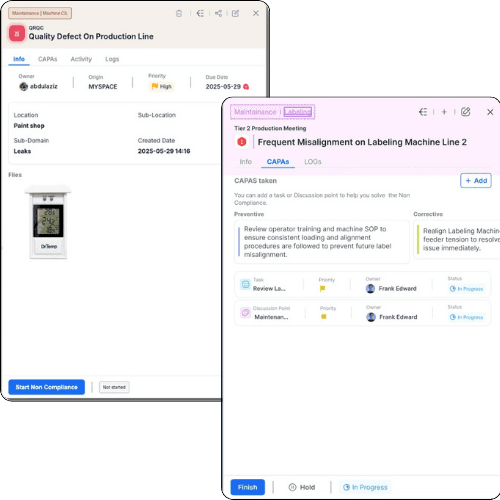
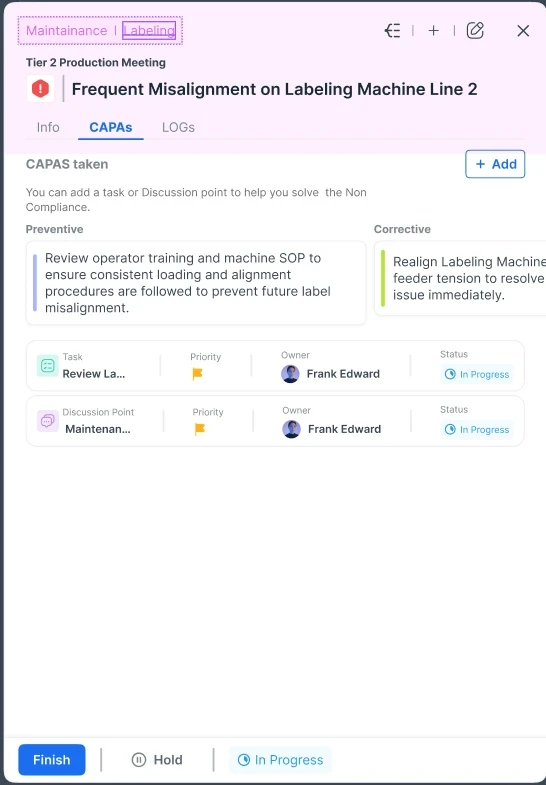
Structured workflows, automatic escalation, and clear ownership eliminate the drift that inflates resolution timelines. Containment actions close within hours. Systemic CAPAs follow a defined path with enforced milestones.
Pass audits with confidence
A complete, timestamped audit trail for every non-conformance satisfies ISO, IATF, and customer audit requirements without manual reconstruction. 8D reports are generated from workflow data, not assembled from memory and email threads.
Improve root cause quality
Enforced analysis workflows prevent superficial conclusions. Teams address actual causes, reducing recurrence of the same issues. When a 5-Why analysis is required, the system ensures that each "why" is documented and that the root cause is actionable — not a restatement of the symptom.
Connect detection to resolution in one system
From Manvis visual inspection alerts to NC capture to CAPA closure, the entire lifecycle lives in EmpowerOps. The closed loop between detection and correction eliminates the handoff delays that define traditional quality management.
Expected Outcomes:
In early deployments, average CAPA closure time has decreased from 21 days to under 10 days, with containment actions closing within the same shift.
Repeat non-conformance rates have decreased by 30-50% as root cause analysis quality improves through enforced methodology.
Audit preparation time for customer and certification audits has been reduced by approximately 75% through automatic trail generation and 8D report assembly.

Related Modules & Pages
See EmpowerOps in Action
See how the Non-Compliance / CAPA module brings discipline to your corrective action process. We will walk you through the full workflow from detection to verified closure and show you how structured root cause analysis, enforced verification, and automatic audit trails change the way your plant manages quality.